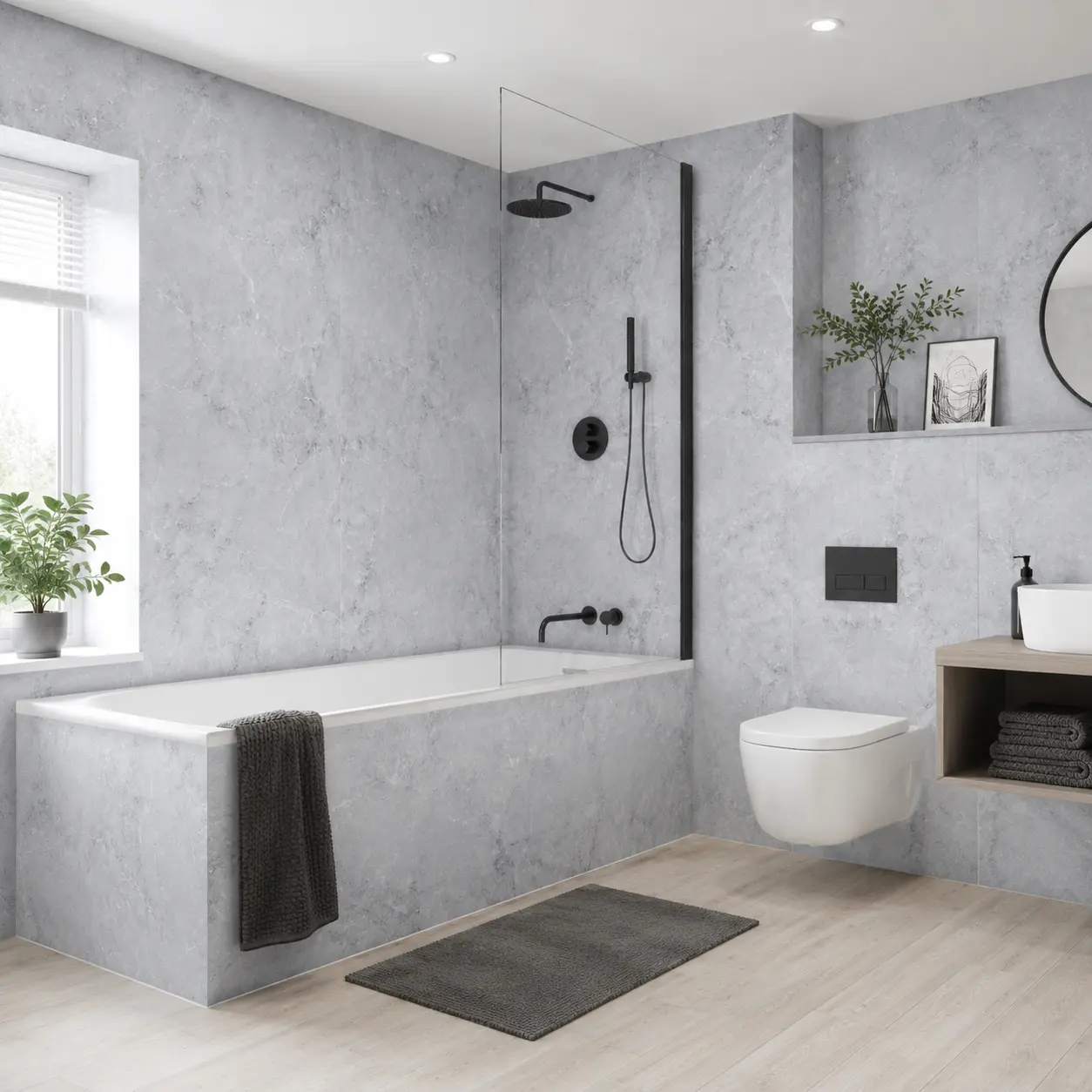
Find the Care Sheet for Your Panels
Start with the manufacturer and range fitted in your bathroom. Printed stone, marble and plain panels can use different surfaces, so the picture on the board does not tell you which cleaner is suitable. Keep the care sheet supplied at installation or ask the fitter for the details. If you have moved into a home with existing panels, try to identify them before using a strong product. General bathroom-cleaner labels cannot confirm compatibility with every wall finish. The right instructions are those for your actual panel and the seals and fittings beside it.
Use Gentle Tools and an Approved Cleaner
Follow the recommended method, which may allow a soft cloth and mild non-abrasive cleaner. Do not assume that a scouring pad suitable for another surface is safe for the panel face. Grit trapped in a cloth or cleaning tool can also scratch some finishes. Keep the materials clean and avoid pressing harder when a mark does not move. Check the product advice or contact the supplier instead. A small stain can become a larger visible patch if repeated scrubbing changes the shine or damages the printed surface around it.
Clean Soap Residue Before It Builds Up
Soap and shampoo can collect around taps, screens and the lower wall. A regular gentle wipe is usually easier to keep up than dealing with a heavy coating later. Move bottles out of the way so you can reach the panel without balancing them on a narrow bath edge. Use the care instructions for rinsing and drying after cleaning. Panels reduce grout lines, but they do not remove the need to clean. Choose a routine that fits the household and leaves the important corners accessible, rather than relying on an occasional strong treatment.
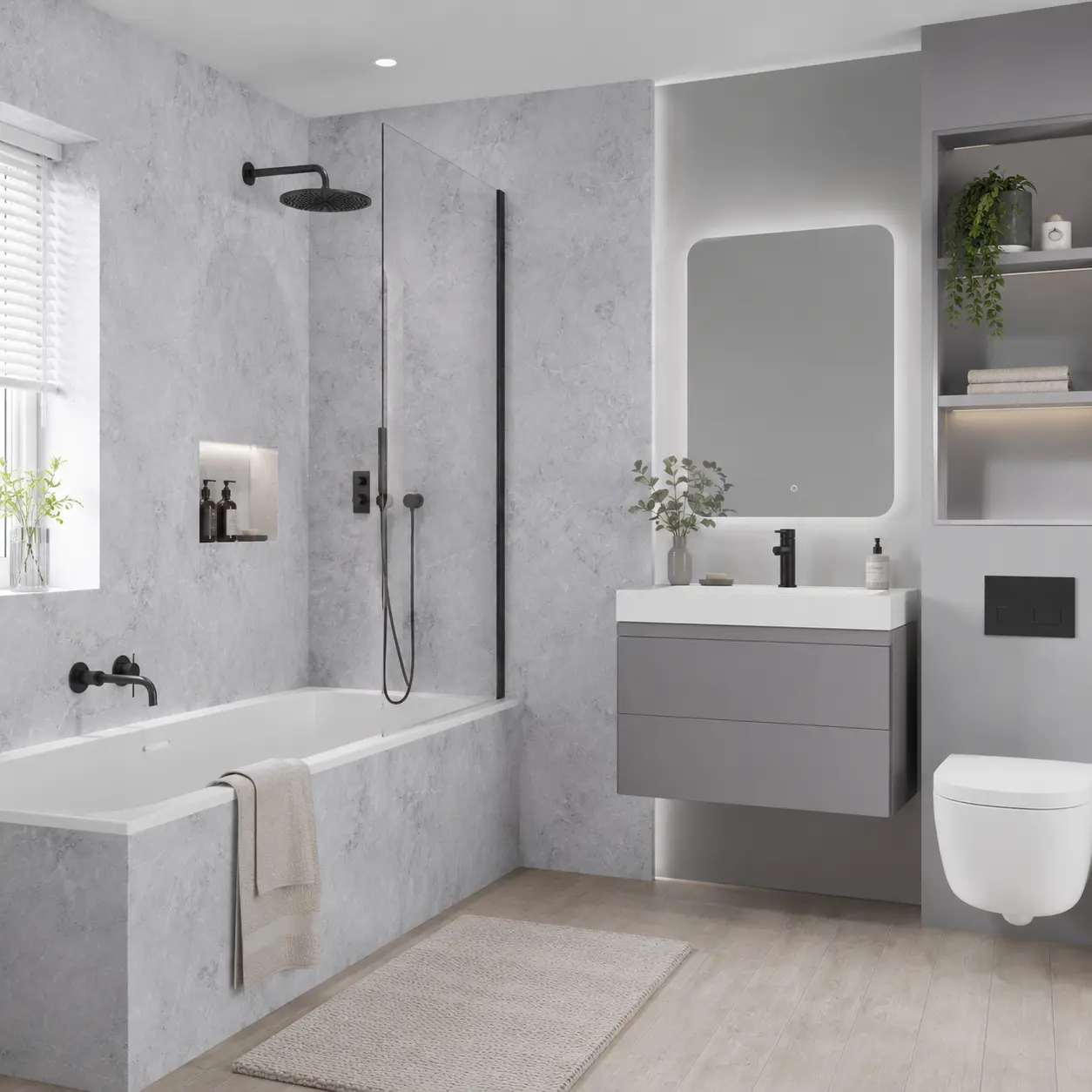
Treat Water Marks According to the Product
Water marks can show differently on dark, glossy or textured finishes. Ask which cleaner the panel maker recommends for the marks you are seeing. A limescale product used on a tap may not be suitable for the wall or seal beside it. Avoid scraping the surface with a blade or abrasive tool. If gentle approved cleaning does not help, explain the mark to the supplier before trying something stronger. Note whether it appeared after a particular household product was used. That information is more useful than experimenting with several unrelated cleaners and losing track of what changed.
Look After the Corners and Seals
Wipe the joints carefully without picking or scraping at them. Look for gaps, lifted edges, splits or staining that returns soon after cleaning. Those changes may need a check of the seal or the fitting behind it. Adding more silicone over a damaged joint can hide the symptom without finding the cause. A moving bath or leaking connection needs a different response from ordinary dirt. Keep the installer and product details handy so you can explain what has changed. The smooth panel face can still look good while a connection around it needs attention.
Keep Ventilation Working as Intended
A clean wall does not remove moisture from the air. Use the bathroom’s ventilation as instructed and keep accessible fan grilles clean in line with the appliance guidance. Leave electrical servicing to an appropriate professional. If condensation or damp marks keep returning, arrange a check rather than assuming more surface cleaning will solve it. A leak may also need investigation. Panels are part of the room’s finish; they do not replace ventilation or repair plumbing. Mention persistent moisture problems when discussing a refit so access and any necessary work can be planned before new surfaces close the wall.
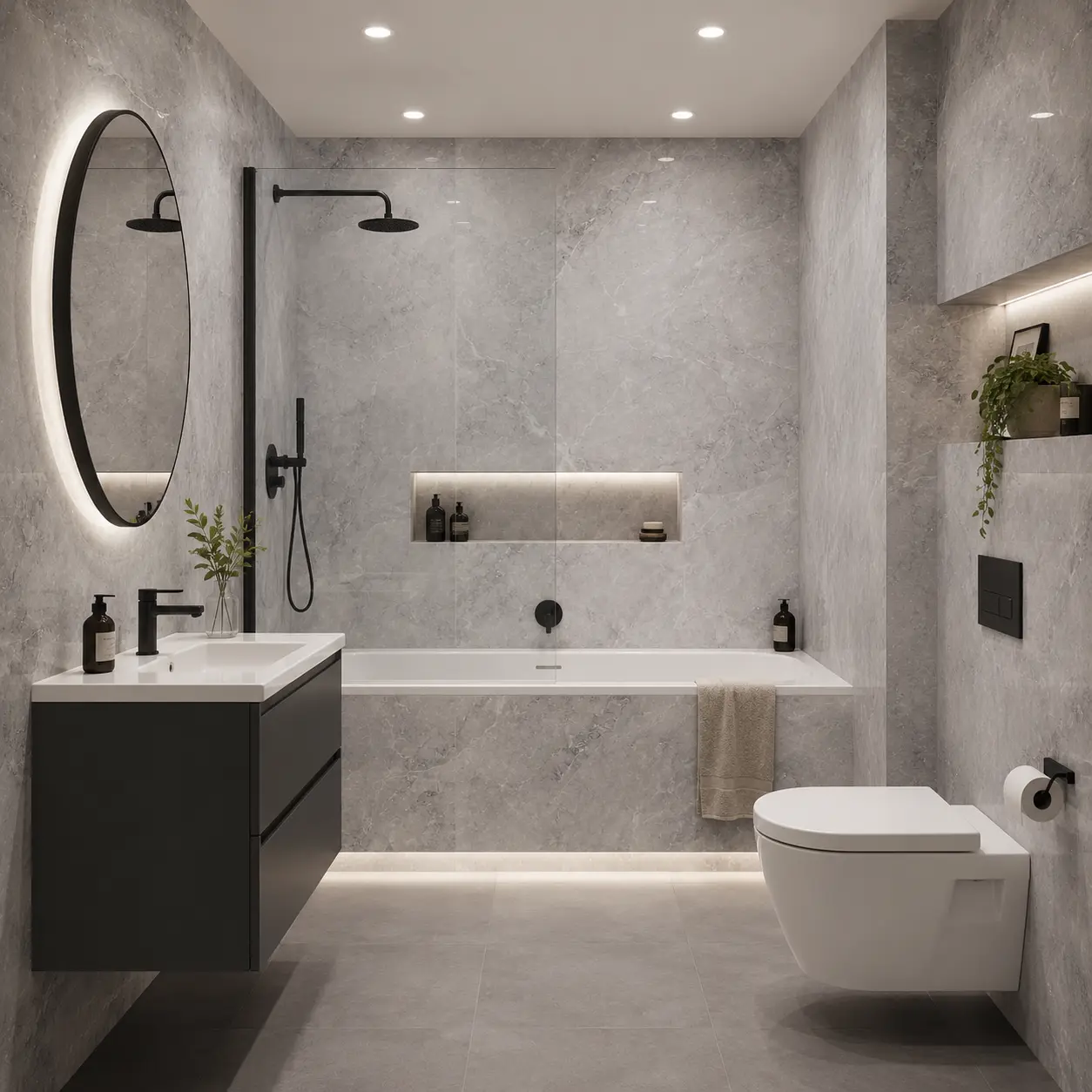
Avoid Unsuitable Chemicals and Quick Fixes
Check before using bleach, solvents, dyes, polishes or specialist stain treatments on the panels. Products safe on one finish can damage another. Do not mix cleaning chemicals. Follow the supplier’s advice for spills such as hair dye and avoid leaving containers resting against the wall where prolonged contact could mark it. A hidden test does not override a manufacturer’s restriction or prove that repeated use will be harmless. If you are unsure, describe the substance and the panel range when asking for advice. This gives the supplier a clearer basis for recommending a suitable next step.
Recognise When a Repair Is Needed
Swelling, a loose board, water escaping outside the shower or a recurring damp smell may indicate more than a cleaning problem. Record where it happens and whether it changes after shower use. Arrange suitable help and avoid use that makes an active leak worse. Do not drill or pull apart the wall to investigate it yourself. Significant or recurring mould needs appropriate advice about its cause and treatment. Cleaning guidance applies to an intact surface; it cannot restore damaged material or correct a connection that is letting water behind the panels.
Keep a Simple Record for Future Care
Save the panel name, colour, care sheet and details of any repairs together. If a sealant or fitting is replaced, keep its instructions too. At handover after repair, ask when the area can get wet and follow that waiting period. During normal cleaning, notice changes and report them early with a photograph if useful. You do not need a complicated maintenance schedule to keep the bathroom manageable. Gentle approved cleaning, working ventilation, clear access to joints and prompt attention to damage give you a practical routine for looking after the room.