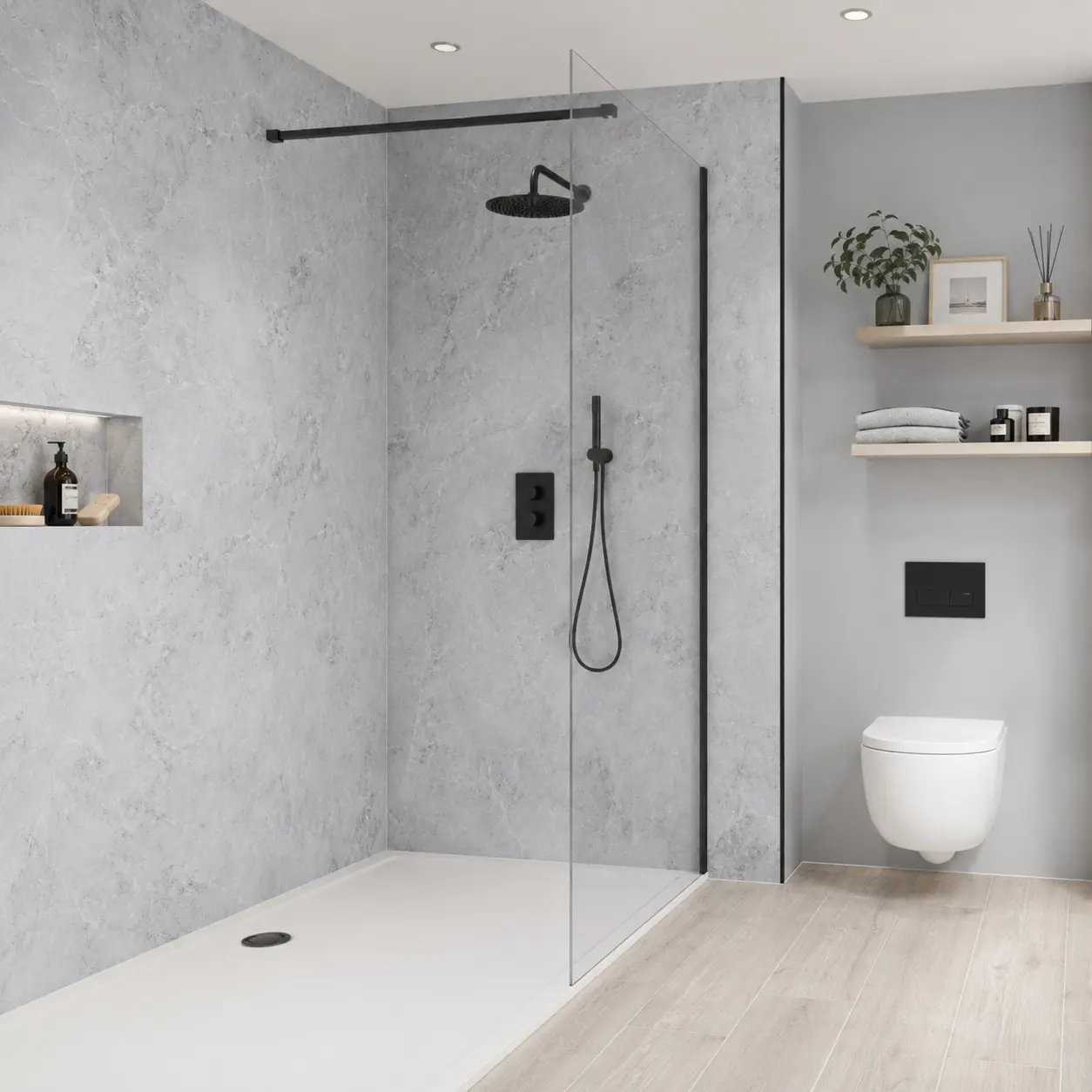
Choose the Bathroom Layout Before the Pattern
Decide which fittings stay and which you want to change before settling on a wall finish. A new vanity, shower screen or bath position changes how much panel is visible and where openings are needed. Start with problems such as crowded storage or awkward shower entry. The panel should work with the improved layout rather than force it to match a photograph. You can still collect colours and ideas early, but keep the final choice connected to the actual room measurements. A beautiful sample will not make up for drawers that cannot open or a shower that is difficult to enter.
Check the Product Is Suitable for Its Position
A decorative wall board is not automatically suitable inside a shower. Ask for the exact range and its intended use before comparing prices. Similar marble or stone designs can be printed on different board constructions with different joints and fitting requirements. The product information should explain which areas it can be used in and what components are needed. Keep that separate from the style name. Words such as premium or natural describe how the product is marketed or looks; they do not replace the instructions that determine how the panel should be fitted around water.
Look Beyond the Small Sample
A sample helps with colour, texture and shine, but may show only a small part of a larger design. Request an image of the complete board, especially for marble veins, tile lines or wood grain. Check how the pattern repeats and whether neighbouring boards are meant to line up. In a compact bathroom, mirrors and fittings may hide much of the design. Ask where joins and short cut pieces will sit. Seeing those positions on a simple drawing is more useful than assuming every wall will look like an uninterrupted display in a catalogue.
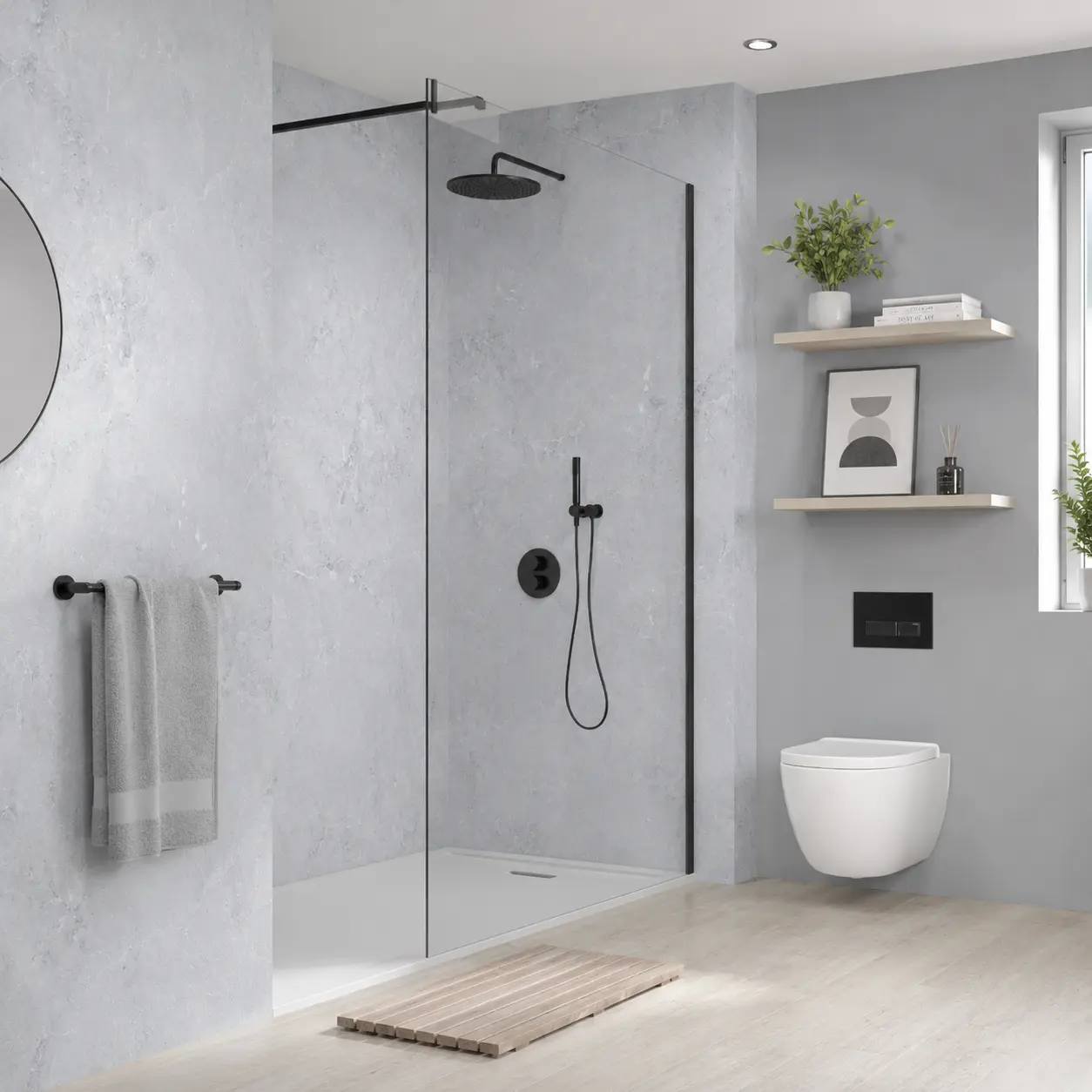
Compare Colours in Your Bathroom
Hold samples upright near the bath, shower and vanity. Look in daylight and with the room’s lights on. White, beige and grey panels can have different warm or cool tones that become obvious beside the floor or basin. If you are keeping existing fittings, include them in the comparison. A darker feature wall can work in some small rooms, while a plain pale finish may suit another. There is no colour that automatically improves every bathroom. Choose the combination you like in the lighting you actually use, rather than under a supplier’s display light alone.
Choose the Surface with Cleaning in Mind
Gloss, matt and textured faces look and feel different. Gloss reflects more of the surroundings; matt usually gives a softer reflection. Texture can change how water marks and soap residue appear, as well as the cleaning method. Read the care sheet before deciding. Do not assume one finish is always easiest or that any bathroom cleaner will suit it. Think about the household’s routine and whether the panel will receive direct shower spray. The best surface is one you like and can look after according to its actual instructions.
See the Trims and Joints Too
Ask to see corners, exposed-edge pieces and joining details with the main sample. Their colour and width can affect the finished appearance, particularly around a small window or a panel that stops beside paint. Some systems have shaped board edges; others use separate joining pieces. The instructions decide how those connections are made and sealed. A matching colour alone is not enough to show compatibility. Confirm the full set of parts in the quote so you know what the visible corners and ends will look like when the bathroom is finished.
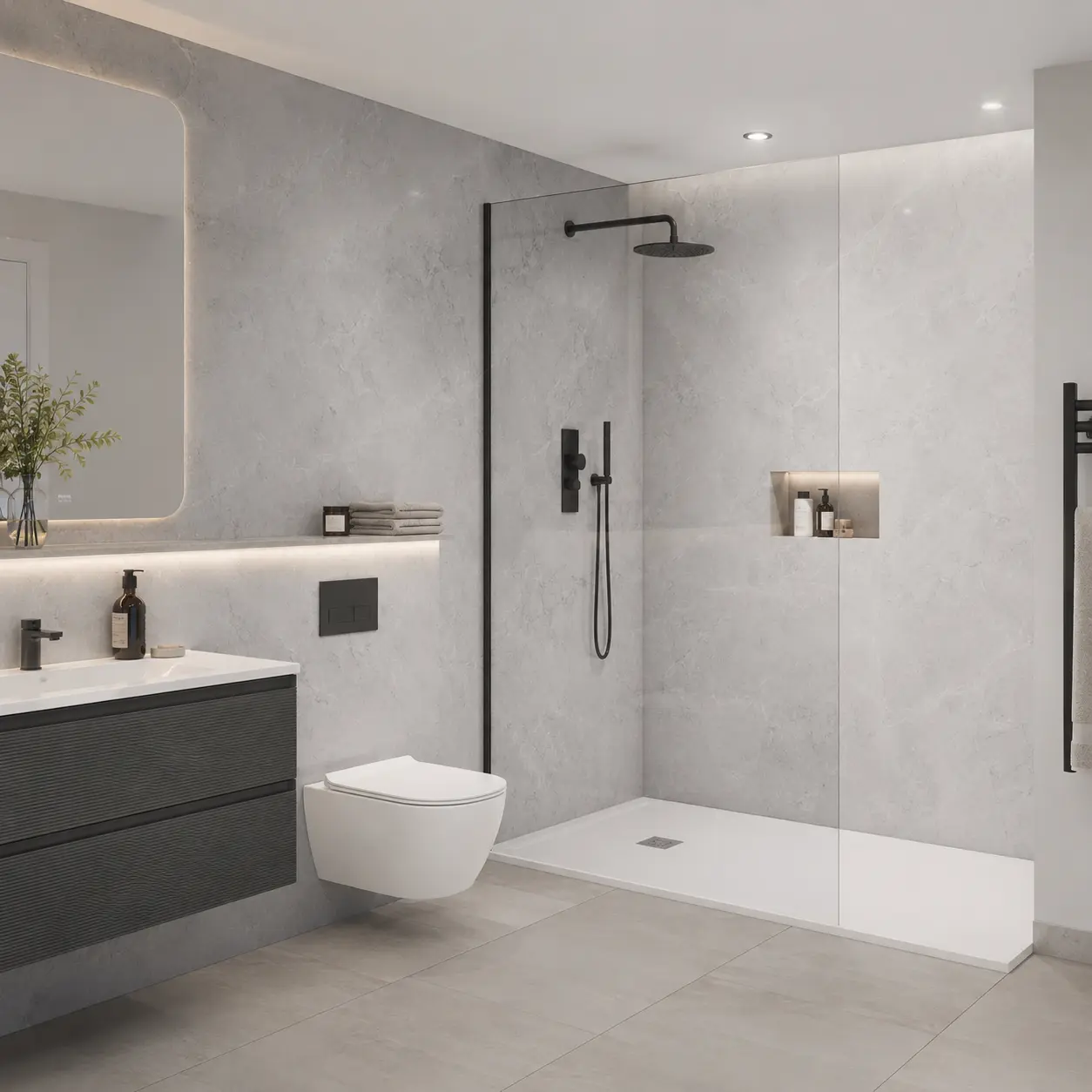
Check Board Sizes and Delivery Access
Panel widths, heights and thicknesses differ between ranges. Larger boards may reduce joins but create handling difficulties through stairs or narrow doorways. Ask the fitter to measure the delivery route as well as the walls. Thickness also affects the final position of screens, controls and window edges, particularly if panels go over existing tiles. A small sample does not reveal these practical questions. If you change the product after receiving a quote, check whether its dimensions alter the amount of material, cutting, preparation or fitting work before the order is placed.
Compare the Complete Fitted Price
Include removal, wall preparation, boards, trims, adhesive, seals, fitting and disposal when comparing options. A lower sheet price may need more boards or more work around the room. Ask for each quoted range to cover the same walls and heights. If one choice costs more, find out whether the difference comes from its appearance, construction, size or installation. Then decide whether that difference matters to you. Spending more on a finish is a personal choice; it should not leave essential wall repairs, useful storage or ventilation out of the bathroom plan without discussion.
Record the Final Choice Clearly
Keep the manufacturer, range, colour, finish and board size with the accepted quote. Retain the sample until delivery so any obvious mismatch can be raised before fitting. Confirm the planned joins and coverage, and ask for the care instructions at handover. If you are still unsure, narrow the shortlist to two or three suitable products and compare them with the floor and furniture together. A good decision combines the appearance you want with a product suited to the room and a clear explanation of how it will be fitted.