Start with the Bathroom You Have
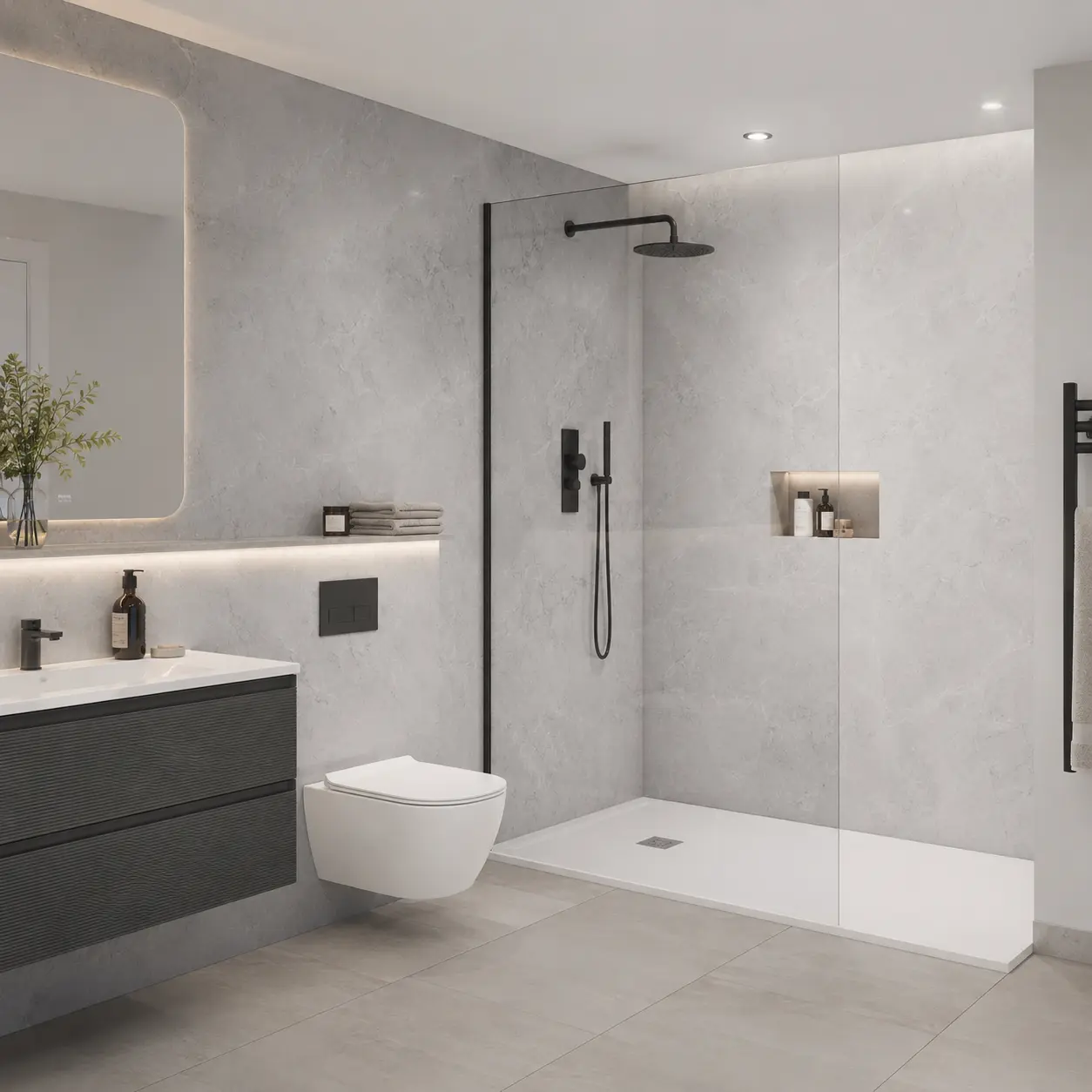
Panels and tiles are both options for bathroom walls, but the right comparison starts with your room. Think about the appearance you like, how much cleaning you want to do and which surfaces need replacing. Tell the fitter about damaged walls or leaks before discussing the new finish. Neither choice should simply cover an unresolved problem. Ask for suitable product options and the preparation each needs. This gives you something useful to compare, rather than deciding from a broad claim that panels are always better or that tiles automatically last longer in every installation.
Understand the Difference in Joints
Individual tiles create grout joints across the wall. Large panels have fewer board connections, which can reduce the amount of grout cleaning. Panels still meet at corners, around openings and beside baths or trays. Those connections need the correct fitting and seals. If dirty grout is your main frustration, panels may be worth comparing closely. If you enjoy a particular tile shape or laying pattern, the extra joints may be part of the look you want. Fewer joints should mean a different maintenance routine, not a promise that the bathroom never needs attention.
Compare the Full Pattern
Tiles let you choose individual shapes, sizes and arrangements. Panels can show a broad marble, stone or plain design over a larger sheet. A tile-effect panel carries a tiled appearance without separate grout between every printed shape. Look at several tiles together or a full-board panel image before choosing. A small sample may hide a strong repeat or a large vein. Compare the design with your wall width, mirror and shower screen. The finish needs to work around those interruptions, not only across the uninterrupted wall shown in a catalogue photograph.
Look at Texture and Light
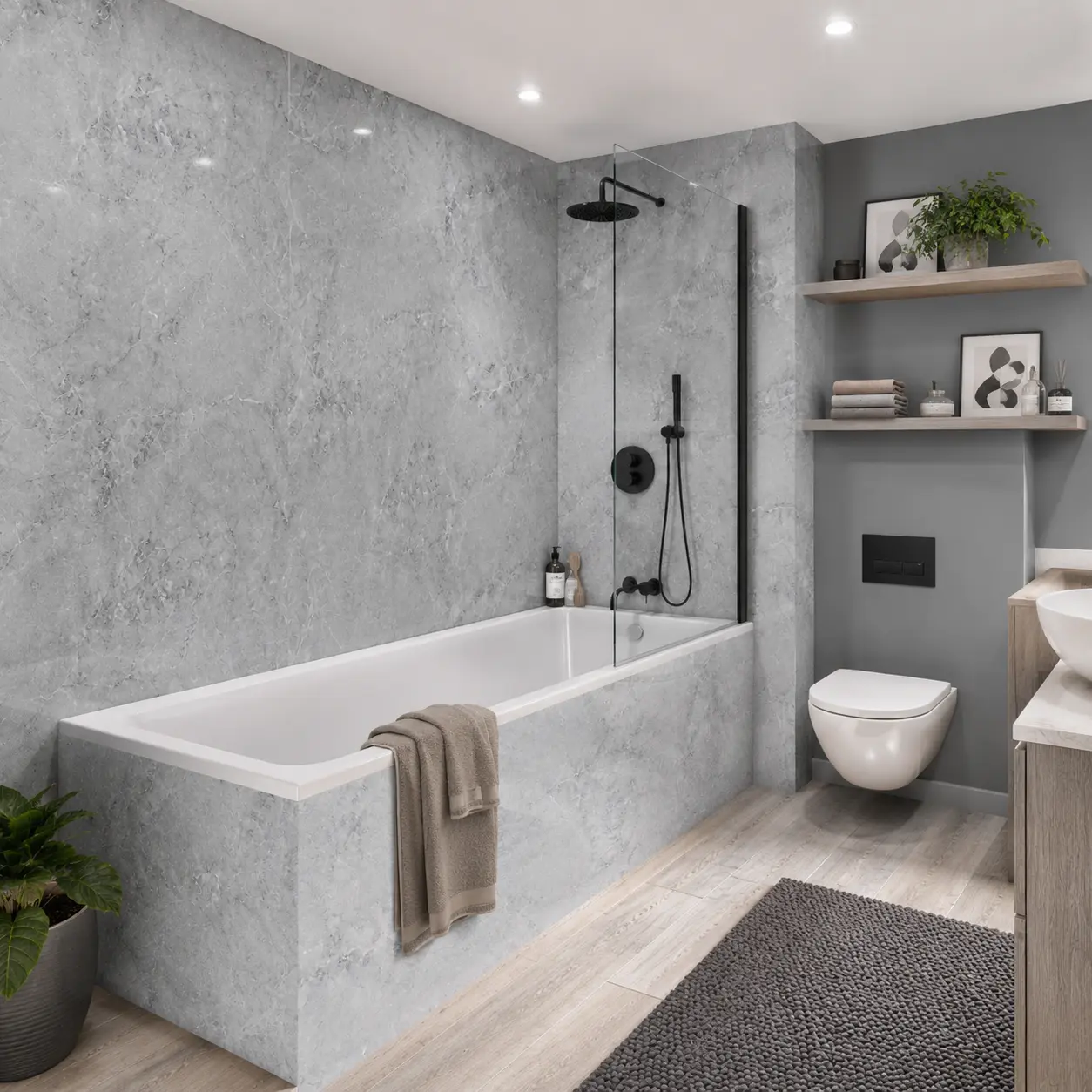
The surface may be glossy, matt or textured, depending on the product. Hold samples upright in the bathroom and compare them beside your floor and vanity. A grey that looks neutral in a shop may look cooler under your mirror light. Tiles and panels with similar pictures can feel different to the touch. Check the actual sample rather than assuming the material name tells you everything. The best-looking choice is the one you like in your own lighting, with the other surfaces you plan to keep or install around it.
Ask About Preparation for Each Option
The existing wall must suit the selected system. Some panels can be fitted over secure tiles if their instructions allow it; other situations require removal. Tiling also needs suitable preparation and any specified waterproofing. Ask what will be repaired, levelled or replaced before the new finish goes on. This can affect the total cost more than the difference between two samples. A materials-only price leaves out that work. Compare fitting plans that describe the same room condition so you can understand why one option costs more or involves a longer interruption.
Think About Everyday Cleaning
Panels can make large wall areas straightforward to wipe, while tiled walls include grout that needs care. The exact cleaning method depends on the product. Some finishes can be damaged by cleaners that are suitable for another surface, so read the care instructions. Soap residue still gathers around screens, taps and lower edges with either option. Check whether the layout allows you to reach those places. A smooth finish does not help much if a narrow gap behind the screen remains inaccessible. Cleaning convenience comes from both the surface and the arrangement of the bathroom.
Consider How Damage Would Be Repaired
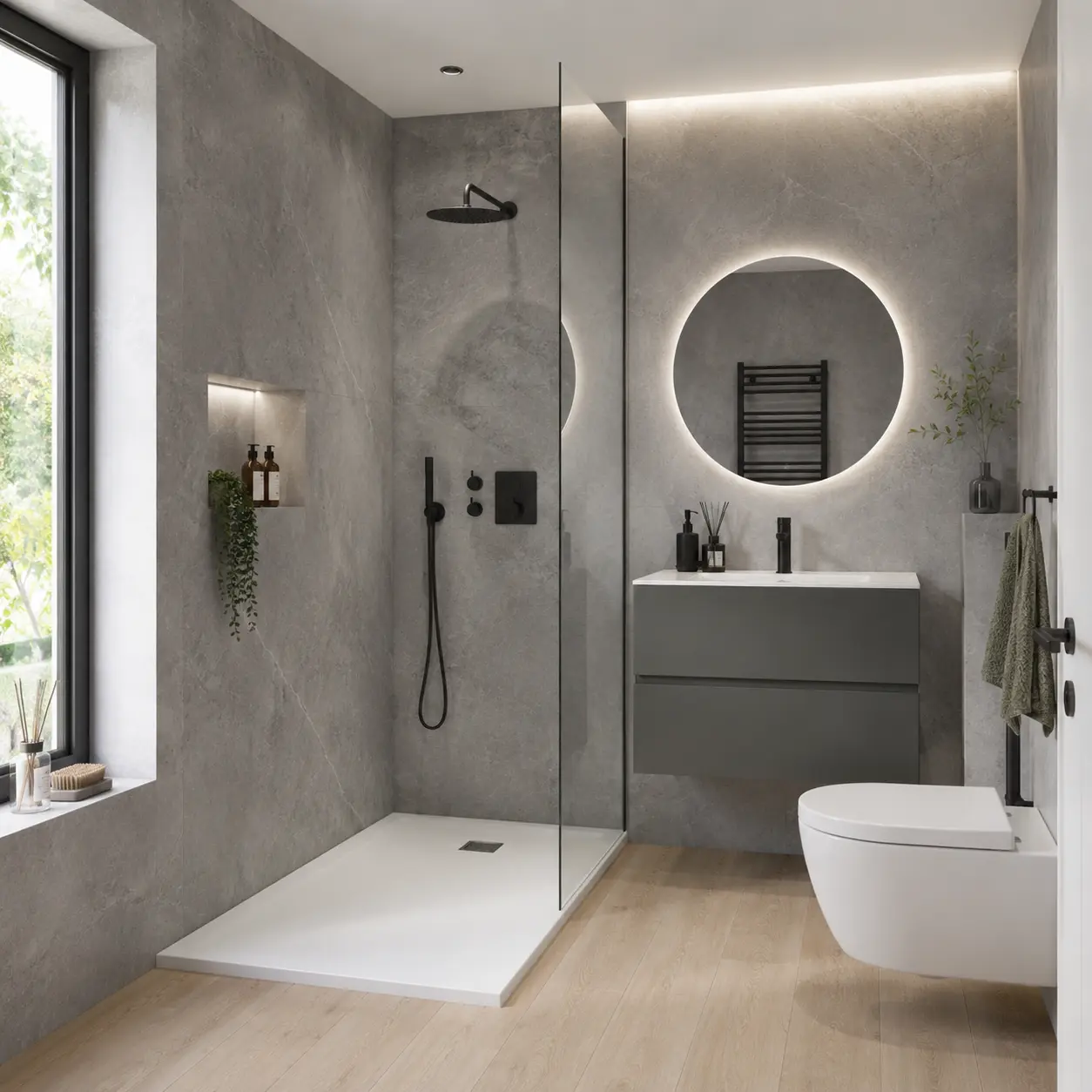
A cracked tile may be replaceable on its own if a match is available and the surrounding installation can be protected. A panel repair may involve a larger board and removal of trims or fittings. Neither method guarantees an invisible repair years later. Ask how the chosen system can be accessed, especially behind a fixed screen or vanity. Keep product references and suitable spare material where practical. This is not a reason to avoid either option; it is useful information when weighing appearance, future maintenance and how much of the wall is covered by each piece.
Compare the Installed Price and Timing
Use the same walls and heights when asking for prices. Include old-surface removal, preparation, materials, fittings, finishing and disposal. A cheap tile price per square metre cannot be compared directly with a panel price per board. The layout, cuts and labour need to be included. Ask when bathroom facilities will be unavailable and what waiting time the adhesives and seals require. Larger boards do not create a guaranteed one-day job. The useful comparison is the complete installation in your bathroom, with an explanation of any difference in work, cost and timing.
Choose the Finish That Meets Your Priorities
Make a short list of what matters most: fewer grout joints, a particular pattern, surface texture, fitted price or repair access. Compare named products against those priorities. If you want panels in the shower and another finish elsewhere, ask how the edges will meet and how each area will be protected from splashes. You do not need a rule that one material wins in every room. A suitable product, clear preparation and a layout you can use and clean give you a better basis for choosing your bathroom walls.